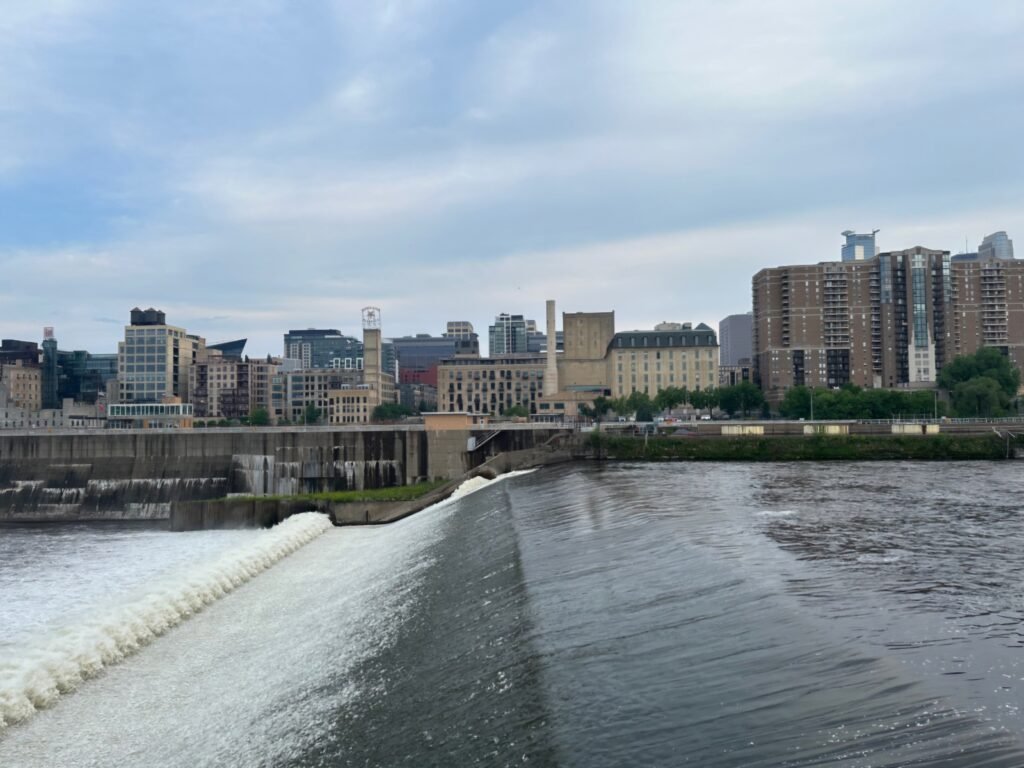
That morning, I overslept and missed the native bird’s brief visit near my porch. I felt uneasy, yet the Mississippi River reflected the sunrise across my window. I kept a journal of these things as a form of comfort, tracking the beauty that became rarer in our lives, but perhaps also to ease my complicity in residing in the US. Dakota was the name of the community that the US as a settler government erased to establish a new spatial arrangement, which later included Minneapolis. In the homework list, I wanted to learn about the Tribe here as a community of guests, though I kept going as a resident of the current state, the so-called United States.
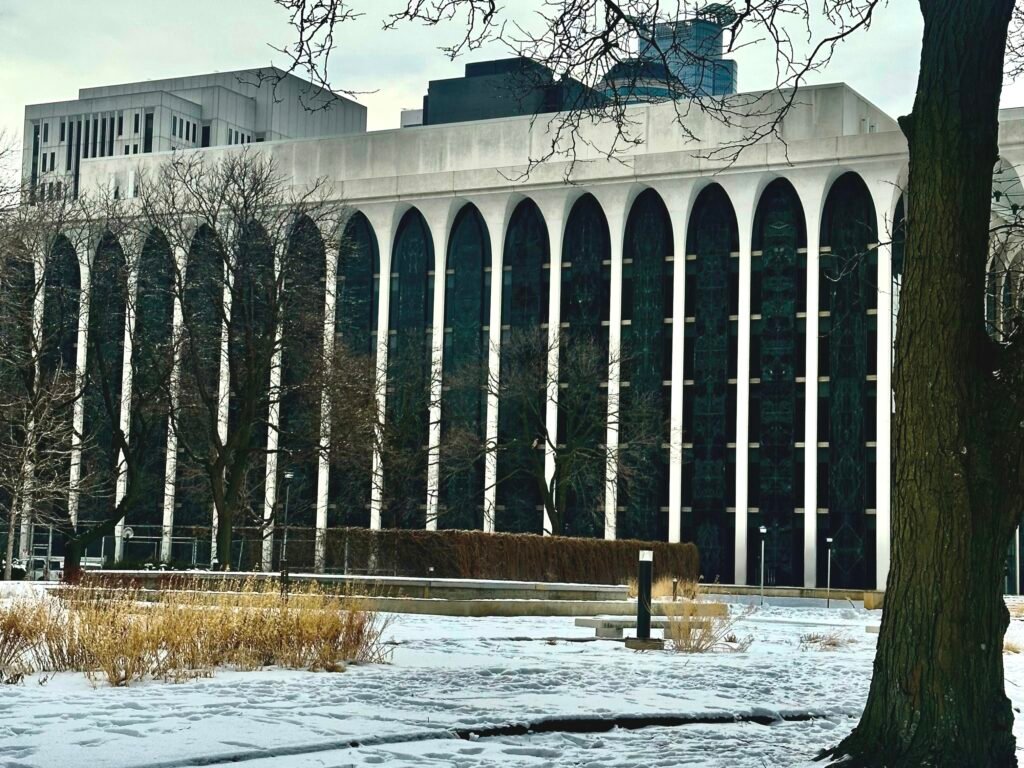
That morning, determined to get my coffee, I walked into the city center, surrounded by glass and steel. The buildings crafted by architect Minoru Yamasaki stood out. They were once symbols of creativity marking Asian “hope” and immigrant artistic champions melting the US’ borders. Yet they also capture a glimpse of the incarceration of Japanese people in the US after Pearl Harbor. Minoru had also designed the World Trade Center in New York, which was attacked on 9/11, 2001.
Next to the building that Minoru Yamasaki designed, I spotted two men half-running, weaving urgently across the intersection. Their arms were tangled in a desperate grip. That old unease slid over me, fitting close as a second skin. I searched their faces for clues. The younger man’s sturdy frame clashed with the older man’s face, carved with panic. My eyes caught a hand clamped around an elbow. Sitting in the coffee shop, I felt worry and curiosity spar within me. I had a fierce desire to know, just as I know about my own attention to others’ livelihood. Their precarity was evident. For the first time, I could not recognize the villain. I noticed something darker.
I have learned to detect unkindness, urgency, or watchful eyes, even in mundane settings. As I scroll through my iPhone and listen to local radio, a warning crackles: ICE is coming. Some of us believe the history of ICE began supposedly after 9/11. ICE (Immigration and Customs Enforcement, as part of Homeland Security, a specific department of the US national security) has become a new brand of power, control, and militarized acts on the street, and seemingly a holder of impunity. Born from the ruins of 9/11, this agency now stains our mornings with dread, fear, and the need to measure our safety.
My coffee cooled in my hand. I stared at the café’s imitation tree, a pale echo of Minoru’s vision, while panic pulsed through my veins. Shadows of immigrant parents, memories of Japanese incarceration, and distant violence in Asia swirled together. Past and present chaos merged as I recall the two men. I am still searching for the villain in the story. In my solitude, that tall building, as a work of art, always evokes multiple meanings. It serves as a symbolic tracing of a story.
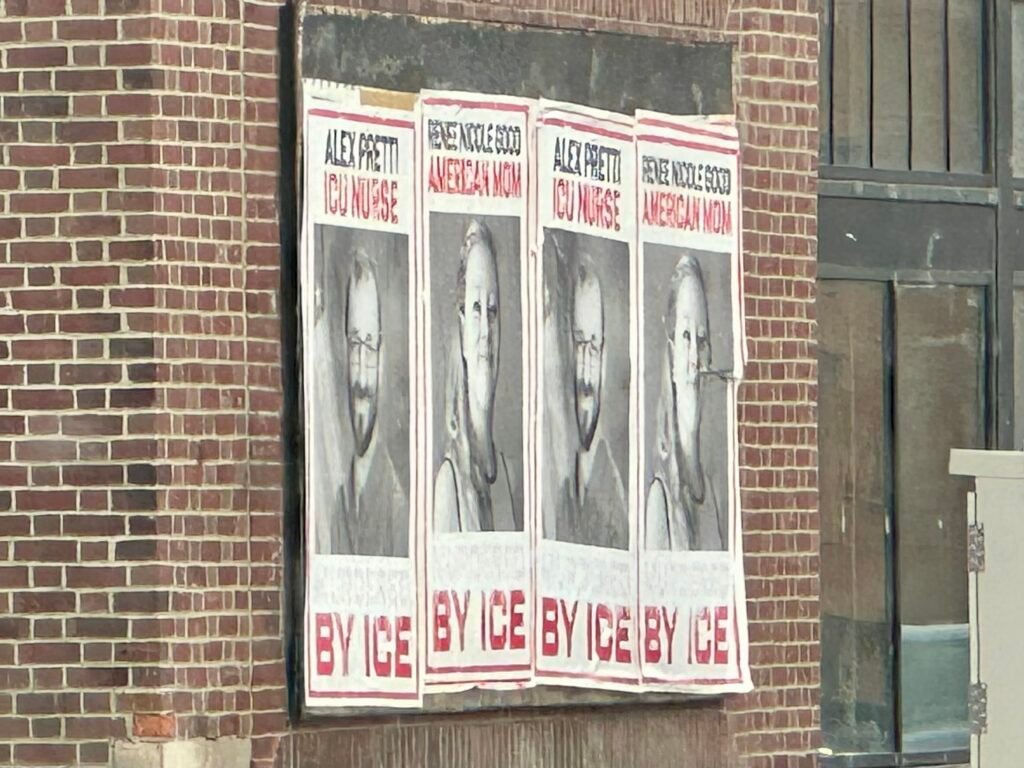
Days later, news rippled across social media and through neighborhood whispers. That day, a friend had texted that someone got shot; a poet. My body goes numb.
Each morning brought new stories of missing workers, halted construction, and urgent alerts. Many Muslims stayed inside. Children vanished from classrooms. Community leaders raised their voices. Kind wishes and secret messages floated through texts, radio, television, and even between tables in restaurants, bars, and sex toy shops.
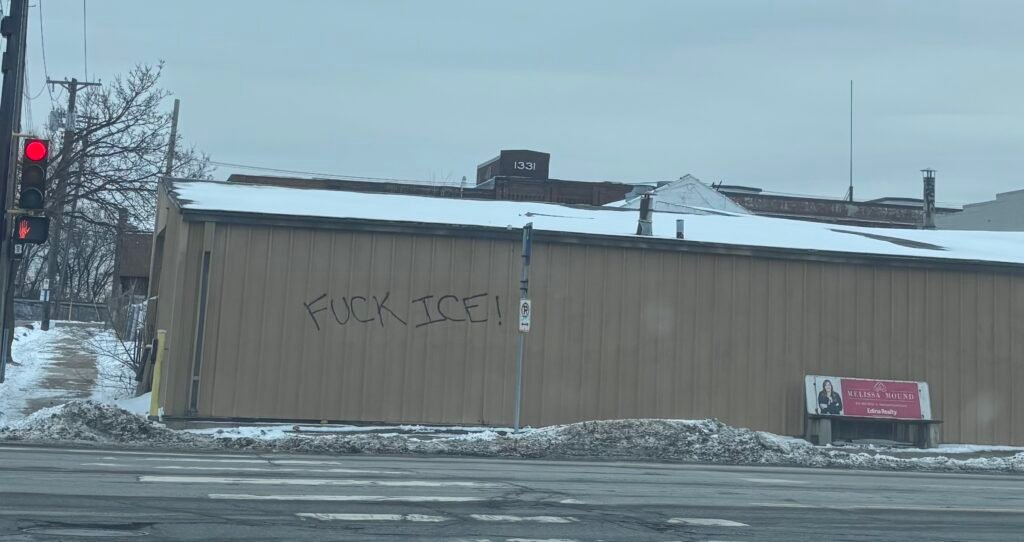
Spaces and tasks, underground businesses and/or restaurants with immigrant laborers, their meanings kept shifting. Streets emptied of people of color, but mutual aid flourished. Unions stood strong. Homes turned into watchtowers. Neighbors united. Whistles were blown, warnings were issued, and collaboration and bystander training multiplied. Even as efforts moved underground, their impact was clear. Still, for many, violence simmered beneath the surface. Jobs vanished. Families fractured. The city was traumatized and in a state of violent continuum.
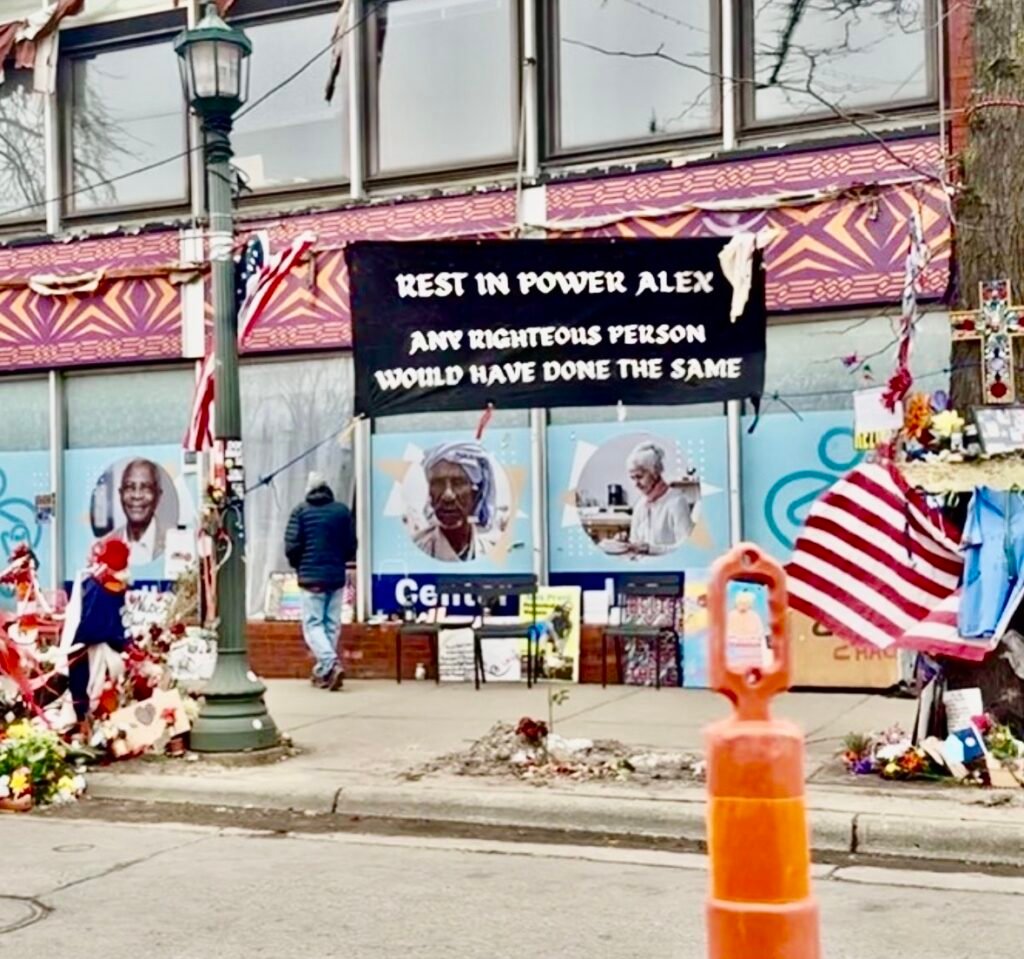
Still, in these times of stories about ICE, two strangers drew near, their eyes sweeping the room for outsiders. Suspicion thickened the air. I grabbed a bottle of Fiji water and slipped outside. A block away, I spotted the second stranger. He lifted his phone to capture my image. I ran. When fear ambushed me, my memory faltered, and gaps appeared. For three weeks, their presence lingered, stretching into February. Life in the city shifted again. Not far from the latest shooting, Renée Good and Alex Pretti’s memorials stood nearby George Floyd’s. Many names remain unspoken, but the detentions and kidnappings continue.
That evening, at the end of January, a student’s home was visited twice in almost a week. A family home is not always safe for students, especially if your family is either Muslim, Somali or Spanish-speaking. She recorded all conversations; I learned the arrogant way these trained killers act, communicate, and surveil. I had some familiarity with it, and yet it felt foreign. Perhaps the modern promises of technology are in operation, hoping they do better? Is this kind of knowledge on my part a call for reflection toward the idea of crossing borders for a better life, as murderous complicity? Or when we stay “home” and pretend nothing happens, moving like a most beloved citizen of the state?
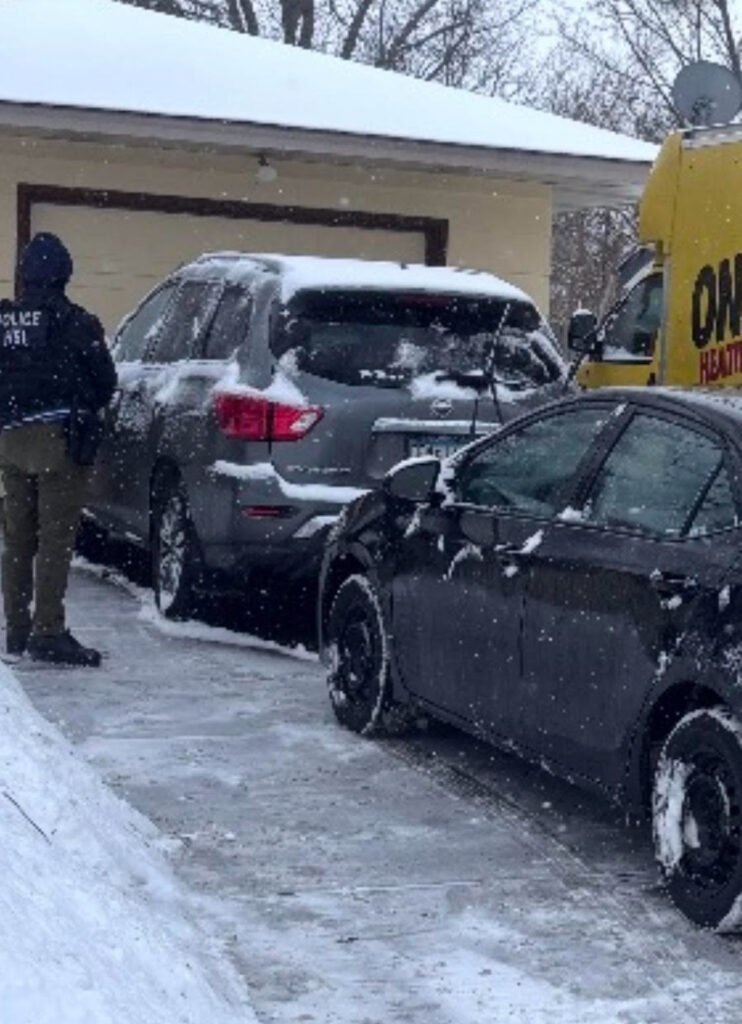
Now an arm of national policy, ICE’s actions have draped Minneapolis in a shroud of fear. The state’s supposed protection feels like a militarized zone in broad daylight. This new surge of anxiety awakens the vigilance I learned as a child. I was my family’s lookout, memorizing motorbike numbers and passing them quietly to elders. The Babinsa’s number was etched in my mind. Its green, gold, and brown badge flashed in the sun. The blue Fiat, the doctor’s assistant’s car, was rare in our village. These small missions taught me to read intent in unfriendly faces and bodies, often through subtle gendered signals.
Babinsa (Bintara Pembina Desa, non-commissioned military officers) served as the village’s ever-watchful military presence, overseeing and mediating the lives of those deemed suspicious. In the aftermath of the 1965 massacres, Babinsa became the point of contact for many village women, who were forced to report every two weeks to a military officer after being accused of communist ties. My aunt endured this routine from 1965 until 1984, even though her role in the village was simply washing rice for rituals. The number on the Babinsa’s motorbike became a vital detail, connecting the officer’s authority to the safety of each household. Elders committed these numbers to memory, each one a silent record of the violence they had witnessed.
Over the years, my instincts have sharpened. After crossing endless skies, ports, languages, and races, my senses are keener than ever. They are tuned to a world far from the one I once called home. I know ICE is here. The fascists are also there. The alliance between the two is unkind.
I open my computer. I am still looking at the shadow of Minoru’s building. Snow still waits to visit. Detentions and arrests still happen. The bomb has set off in Iran. The Board of Peace has been established. Who do you look up to? These murderers?
It is a weekend. As I read the local news, I hear that Unidos Minnesota, an organization for immigration rights, said that protesters will ”sing” tonight outside the orchestra hall not far from Yamasaki’s architecture, during a concert, to amplify the voices of children currently detained at a detention center in Dilley, Texas. A CEO may appear. Next to it, a chain of stores in business in the US / Minnesota, where the first detention occurred. It is a place where I used to buy “Calming Oil” for stress during the dark winter. Can you see the hypocrisy? Violent complicity.
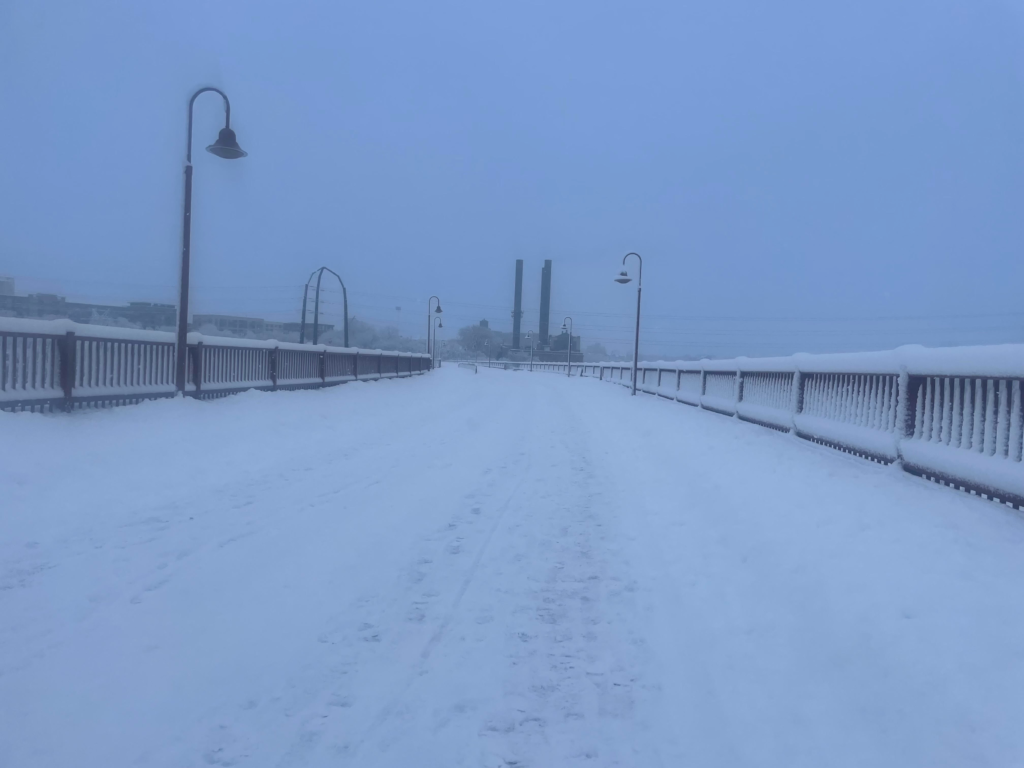
March 2026 arrived quietly. The sky was heavy, anticipating snow. I love my morning coffee ritual into the rhythm of Minneapolis. For years, these streets provided shelter. My footsteps followed the icy banks of the Mississippi. Occasionally, a native bird disrupted the silence, its song echoing across eighteen winters. Each appearance offered a gentle blessing, easing me into a day of wandering. Now, I move through intersections shaped by memories of immigration hearings and many deportations. For me, it brings to mind Indonesia’s PETRUS 1982-1985.
PETRUS, short for Penembak Misterius or “mysterious shooter”, was the name whispered in fear—a military death squad said to execute suspected criminals without warning. Victims were chosen by the way they looked; their names never appeared in any official record. Operating as a shadowy arm of the government, PETRUS left thousands of bodies in plain sight: sprawled on streets, hidden in rice fields, abandoned in forests, markets, homes, and along riverbanks. The so-called mystery of PETRUS became a chilling spectacle of state power, echoing the violence of action films. This ICE operation, fueled by unchecked authority and public spectacle, the violent performativity of it, and the resonating persona, recalls the fear and uncertainty of the times of PETRUS. Blood has spilled here and there. A cry for the city, to some means solitude in Minneapolis. Stay inside!! They are here!! Close your doors!! For some, these are new words, but for me, they sound all too familiar.***
About The Author