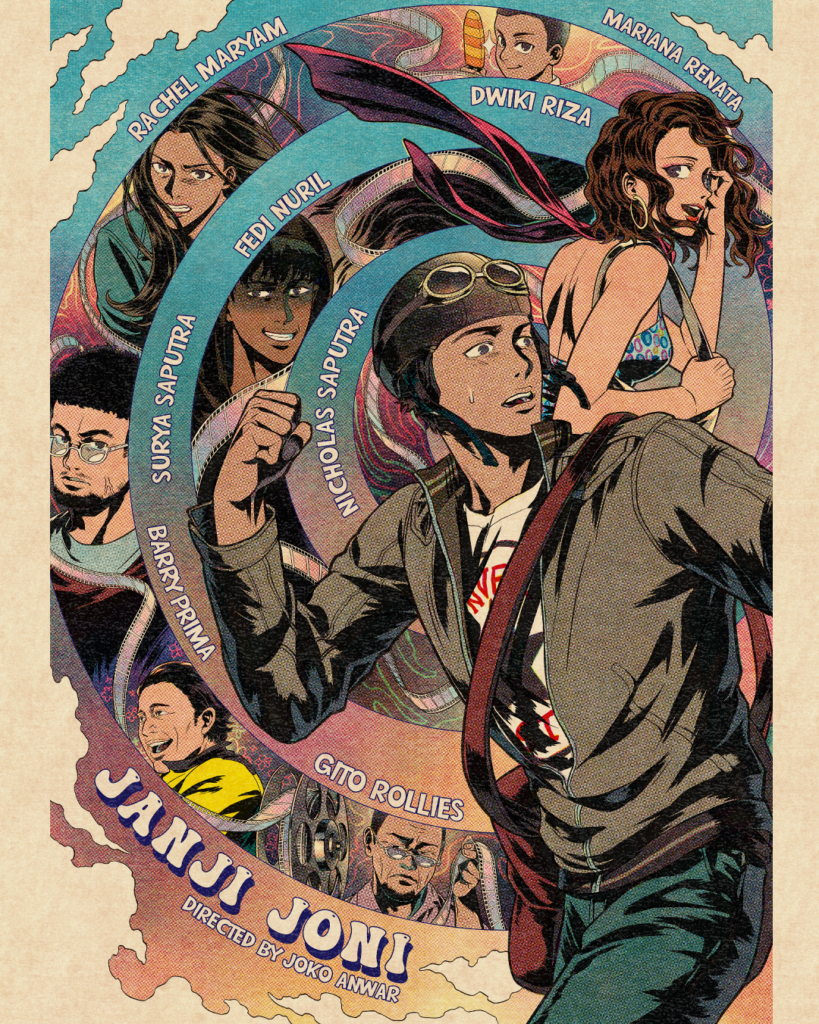
Film posters are often seen as an afterthought to the films that they advertise, but despite their commercial purposes and origins, they can be pieces of art in and of themselves.
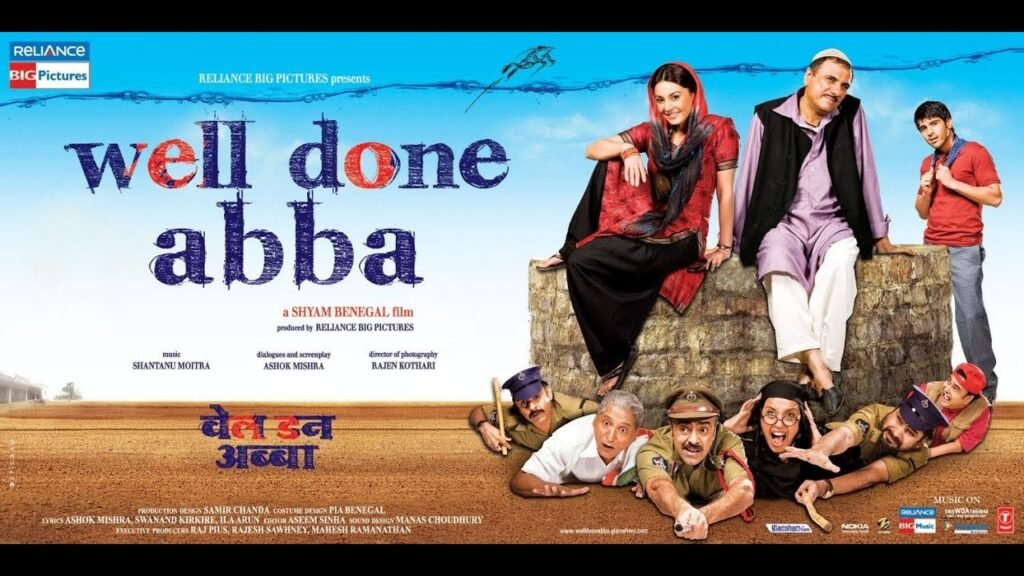
Film posters are typically associated with film promotion, created to attract the largest possible audience. For this purpose, posters are designed to highlight a film’s mass appeal rather than provide detailed information. They usually hint at what the audience can expect: the cast, the genre, and the overall mood. Consequently, poster design is often closely tied to the film’s genre. Horror films, for instance, are frequently represented with dark imagery and red typography, while drama posters often feature characters gazing pensively into the distance, suggesting introspection; and so on.
However, posters are not always about commerce. They can be art, or serve broader public functions. Since the 19th century in France, artists and designers like Henri Toulouse-Lautrec (1864–1901) created posters for cabarets, café concerts, and other performances. By blending promotional purposes with artistic expression, Toulouse-Lautrec’s works not only drew audiences but were often torn down by collectors as soon as they were put up, valued as artworks in their own right. Today, film posters occupy a similar space. The most expensive film poster on record is for Metropolis (directed by Fritz Lang, 1927), designed by German graphic artist Heinz Schulz-Neudamm, which sold for US$690,000 in 2005, while designers like Saul Bass and Bill Gold have become legendary names in the world of visual design.
In Indonesia in particular, artists’ involvement in poster-making can be traced back to the iconic “Boeng, Ajo Boeng” poster. Commissioned by Sukarno, it was painted by legendary painter Affandi, with fellow artist Dullah posing as the model. The text “Boeng, Ajo Boeng” was provided by legendary poet Chairil Anwar, reportedly inspired by the provocative calls of sex workers beckoning potential clients. The poster became iconic, capturing the spirit of Indonesian independence. Its direct and concise language and style offers a glimpse into the spirit of modern Indonesia, a striking contrast to the traditional, metaphor-rich pantun style. As Susan Sontag (1970) noted, in countries that gained independence after World War II, posters played an important role in nation-building.
Despite this, the non-commercial functions of film posters are less recognized due to the capital-intensive nature of the film industry. Indonesian artist-filmmaker Gotot Prakosa (2011) once highlighted the non-commercial function of film posters in the context of government propaganda during the New Order era. While he didn’t provide specific examples, Gotot mentioned that film posters, along with the state TV channel TVRI, were integral parts of what one might call a propaganda-industrial complex, arguing that escaping this trap would require breaking the entrenched view of films as mere propaganda tools.
Outside the realm of propaganda, film posters began to gain institutional recognition in 1984 when the Indonesian Film Festival (FFI), following a suggestion by the late writer-director Asrul Sani, introduced an award for poster design. This led to the creation of the S. Toetoer Award, given for outstanding poster design. Little is known about S. Toetoer (real name Toetoer Soemosentono) himself, other than the fact that he was active in Persagi (the Indonesian Association of Visual Artists, Persatuan Ahli Gambar Indonesia, established 1938) and was reportedly a designer for the Japanese military government (Gunseikanbu) from 1943 to 1945, later opening a painting and poster studio named Rembrandt. In any case, the lack of comprehensive information about his life and work highlights a larger gap in our understanding of graphic design and poster art history in Indonesia.
Fortunately, this void is beginning to be addressed. The work of artist Delsy Syamsyumar (1935–2001) was recently exhibited by the Jakarta Arts Council at Taman Ismail Marzuki. A multidisciplinary artist, Delsy’s work spanned from painting, comics, storyboards, journalism, to film production design. He was arguably one of the first storyboard artists in Indonesia, contributing to the 1962 film Holiday in Bali directed by his close friend, director Motinggo Busye. The exhibition, Silang Visual: Delsy dalam Film dan Seni Rupa (23 June – 7 July 2023), placed his work within the larger context of Indonesia’s artistic movements and political tensions during his lifetime. Comic book expert Hikmat Darmawan even suggested that Delsy may have pioneered painted comic art (komik lukisan) not only in Indonesia but perhaps in the global stage. While film posters were not the central focus of this exhibition, it emphasized their importance in broader discussions of art history, visual communication, and applied arts in Indonesia.
The rise of the internet has transformed how film posters and other promotional materials are circulated and consumed, especially via social media. These days, the release of posters and trailers is often announced with countdowns, generating buzz long before the film premieres. Content creators respond by analysing posters and trailers, often generating high levels of engagement. This has changed viewing culture itself: anticipation has become an integral part of the film-watching experience, while expectations are heightened. Posters are now subject to intense scrutiny, a far cry from the days when they were modestly displayed in cinema lobbies or printed in newspaper ads. However, this also means that posters can now stand alone as aesthetic works. They are more likely to be evaluated, appreciated, and shared independently of the films they represent, which is a promising development for artists, designers and visual communicators at large.
Digital platforms have also reinforced creative models, as seen in the work of Thy Atelier featured in this book. While their posters still serve promotional purposes and retain mass appeal, they also function as fan art, works born of admiration and engagement with popular culture. Fan art is typically non-commissioned and unofficial. It has existed since the days of Sherlock Holmes (1887–1972), but truly took off in the 1970s with the rise of Star Trek and Star Wars. Today, fan art enjoys platforms like DeviantArt where fans can share and appreciate each other’s work within what is known as fandom, a realm built on empathy and kinship. The origin of the word “fan” in fan art comes from “fanatic,” which is generally understood as someone who is overly enthusiastic about what they like. However, when the term is placed within the context of fandom, its negative connotation diminishes and shifts closer to empathy and camaraderie that arise from shared interests.
Quoting Laura Hetrick (2018), fan art is essentially an interaction between artworks. A devoted fan may deconstruct certain elements of the original, strip away its meaning and syntax, and reinterpret and reassemble it, often producing entirely new meaning. Rather than simply reproducing familiar elements, fan artists combine them with their own creations to suit their artistic goals. In this way, fan art often operates with its own aesthetic logic, distinct from the source material.
In this context, Thy Atelier’s film posters play a crucial role in Indonesia. Some were commissioned as part of official film promotions, but others, such as those for Janji Joni and Pengepungan di Bukit Duri, were created independently as artistic expressions of appreciation. Thy Atelier’s founder, Henry Lumba, is an admirer of Joko Anwar, and Janji Joni is one of his favorite films.
Thy Atelier embodies this approach while consistently drawing from its own sources of inspiration. For example, they borrow character designs from manga, particularly that of Masamune Shirow (known for Ghost in the Shell) and colouring styles from the 1980s aesthetic of DC Comics, especially Dave Gibbons’ style (known for Watchmen). The result, as seen in this book, is a unique fusion of visual influences.
These so-called B-list film poster works by Thy Atelier offer an important point of entry for creative dialogue, repositioning film posters as more than mere cogs in the so-called “promotional industrial complex.” By publishing this collection as a book, Thy Atelier makes a valuable contribution, placing film posters within critical discourse, where they deserve to be. It encourages a deeper appreciation of applied art while allowing posters to be judged on their own aesthetic merits.***
The poster book is available by pre-order here, please contact: @thy_atelier.
References
- Katalog Silang Visual: Delsy dalam Film dan Seni Rupa (Jakarta: Dewan Kesenian Jakarta, 2023).
- Susan Sontag, “Posters: Advertisement, Art, Political Artifact, Commodity,” first published in The Art of Revolution: 96 Posters from Cuba (New York: McGraw-Hill, 1970).
About The Author